How is Dercums disease treated?

Dylan Hughes
Published Jul 11, 2026
How is Dercums disease treated?
There is no “cure” for Dercum disease. At the present time, treatment for this condition is symptomatic, meaning that it focuses on one symptom at a time rather than the whole condition. Depending on the person, options can include weight reduction, surgery for the most painful lipomas, and medications to control pain.
What is the difference between Lipedema and Dercums disease?
Authors have tried to differentiate women with lipedema from those with Dercum disease by examining populations and finding that people with Dercum disease tend to have other pain disorders including higher pain scores, fibromyalgia, abdominal pain, and migraines, and more often have lipomas, cognitive dysfunction and …
What is Ander’s disease?
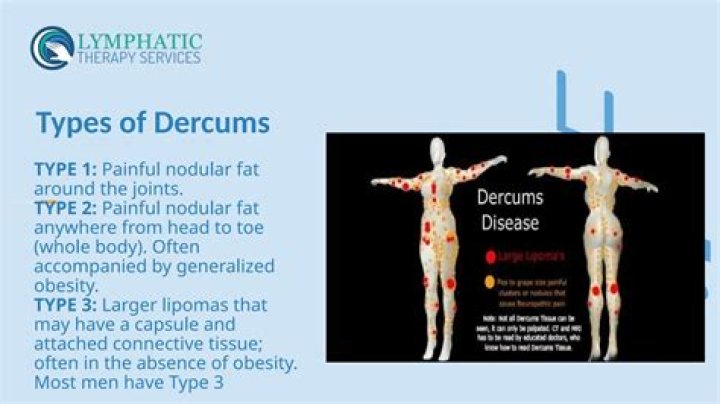
Introduction. Adiposis dolorosa is a rare disorder of multiple painful subcutaneous growths of adipose tissue. It is also known as Dercum disease, Ander syndrome, morbus Dercum, adipose tissue rheumatism, adiposalgia, or lipomatosis dolorosa.
What causes adiposis dolorosa?
The cause of adiposis dolorosa is unknown. The condition is thought to have a genetic component because a few families with multiple affected family members have been reported. However, no associated genes have been identified.
What are possible causes of Dercum’s disease?
Possible hypothesis as regards the cause of Dercum’s disease include: Central Nervous System dysfunction, Adipose tissue dysfunction, Mechanical disruption of nerves, Trauma, Use of corticosteroids, Infection including Lyme disease or valley fever. Endocrine system dysfunction or disturbance Genetic origin
Who treats Dercum disease?
Since this is a very rare condition, you may need to be diagnosed by a specialist. This could be an internist, dermatologist (skin doctor), or an endocrinologist who treats hormone (gland) problems. You may also want to see a pain specialist.
How does Dercum’s disease affect the body?
The effects of Dercum’s disease on the body are similar to those of obesity and can include: difficulty moving or walking up stairs, difficulty breathing, high blood pressure, heart difficulties, increased fatigue, bloating, or constipation.