How is grappa different from wine?

Andrew Campbell
Published Jul 11, 2026
How is grappa different from wine?
Grappa has a higher ABV (alcohol by volume) than wine. You may think of it in the same class, but grappa is actually boozier: wine has an average ABV of 12% while grappa must be between 35-60% in order to be sold; most clock in around 37.5%. By comparison, vodka, rum and tequila are generally 40%.
Is grappa similar to brandy?
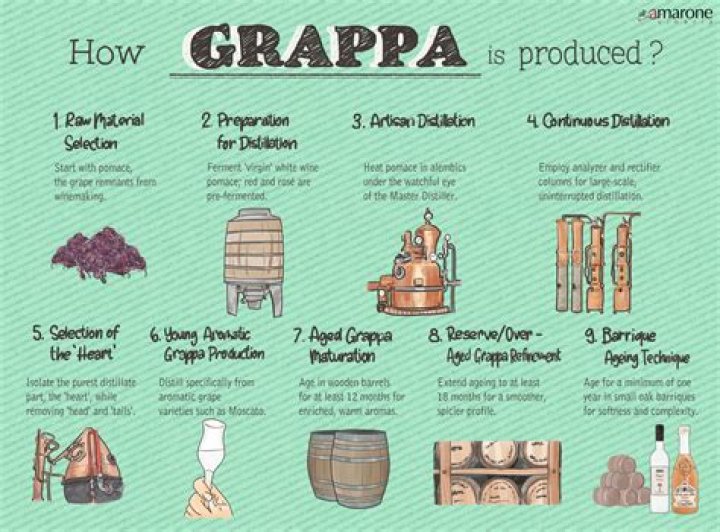
Grappa is obtained by distilling the grape pomace, which is the solid part of the grape (skins and seeds), while a Grape Brandy is obtained by distilling the fermented grape, therefore the solid and liquid part of the grape together.
What kind of wine is grappa?
pomace brandy
Grappa is an alcoholic beverage: a fragrant, grape-based pomace brandy of Italian origin that contains 35 to 60 percent alcohol by volume (70 to 120 US proof).
What does Grappa wine taste like?
It tastes more like sour plums with a twist of honey. It uses the pomace of Recioto di Amarone, which is a sweet dessert wine. Also, the age factor plays a considerable role in the taste of Grappa. The older aged Grappa has an intense flavor.
Is grappa similar to vodka?
There are a couple of differences between grape vodka and grappa. For starters, vodka is far stronger than a lot of grappa, being at least 95% alcohol. Grappa, on the other hand, has a distinct taste that carries the fruity tones and subtle flavours of the pomace from which it was distilled.
Is grappa similar to tequila?
Jeanine Racht of Oregon’s Clear Creek Distillery, a fruit brandy company that also makes grappa in pot stills, feels the same way about tequila and mescal alike. She likens the fruity quality of tequila to white-grape grappa and mescal’s smoky quality to red-grape grappa.
What mixer goes with grappa?
With: Grappa, amaretto liqueur, sugar syrup and espresso coffee. We say: Grappa’s character shines through and is complimented by the amaretto and coffee. Adapted from a drink created in 2006 by George Sinclair.
Why is grappa so bad?
Distilled from pomace, or the grape seeds and stems left over from winemaking, grappa tends to get a bad rap. Unlike the conventional route, distilling in pot stills is slower and results in a spirit with more flavor, viscosity and body.
Do you sip grappa?
It should be served, either at room temperature or slightly chilled, in small glasses. A narrow glass with a slightly wider opening at the top (tulip-style) is ideal for enjoying the aromas. You should swirl the spirit gently in the glass, inhale the aroma briefly and then taste it in small sips.
Do you serve grappa chilled?
Grappa should be served neither too cold nor too warm. The ideal serving temperature is between 48 and 55 degrees for young and aromatic grappa and 60 and 64 degrees for aged grappa. When in doubt, it’s best to serve it at a lower temperature.