What weeks do fetuses have growth spurts?

Michael Hansen
Published Jul 13, 2026
What weeks do fetuses have growth spurts?
Week 15: This week, your baby will have a rapid growth spurt. Don’t be surprised if you think your little one is making faces at you; ultrasounds show frowning, squinting, grimacing, and wincing, as fetuses this age flex and strengthen their facial muscles.
How do you know when your baby is going through a growth spurt?
Baby Growth Spurt Signs
- Your baby is constantly hungry. Just when you think you’ve figured out a feeding schedule, your baby suddenly wants to eat around the clock.
- Your baby’s sleep patterns shift.
- Your baby is fussier than usual.
- Your baby has mastered new tricks.
What weeks are the biggest growth spurts in pregnancy?
At 25 or 26 weeks – right at the end of the second trimester – this is a time when your baby may have another growth spurt. You might feel more hungry for a few weeks, and you might quickly gain several pounds.
Do fetuses grow at different rates?
First trimester growth and development benchmarks Just as each child grows and matures at different rates and at different times, so does that same child as it begins its life in the womb. The chart below provides benchmarks for most normal pregnancies. However, each fetus develops differently.
What week is the third trimester?
A pregnancy is divided into trimesters: the first trimester is from week 1 to the end of week 12. the second trimester is from week 13 to the end of week 26. the third trimester is from week 27 to the end of the pregnancy.
What Should twins weigh at 28 weeks?
Your twins each measure about 38cm (15in) from head to foot (crown to heel), and may weigh about 1kg (2.2lb) each. They’re now sleeping and waking at regular intervals, and you may have noticed that they’re particularly active at certain times of the day.
Why is my 3 month old so cranky?
A common cause of fussy, colic-like symptoms in babies is foremilk-hindmilk imbalance (also called oversupply syndrome, too much milk, etc.) and/or forceful let-down. Other causes of fussiness in babies include diaper rash, thrush, food sensitivities, nipple confusion, low milk supply, etc.
Do babies cluster feed at 3 months?
Your baby will gain about 1 to 1½ inches (2.5 to 3.8 centimeters) in length and 1½ to 2 pounds (681 to 907 grams) this month. This is often called “cluster feeding.” Formula-fed babies may want to eat more often or will drink more formula than usual during feedings.
When do babies go through growth spurt?
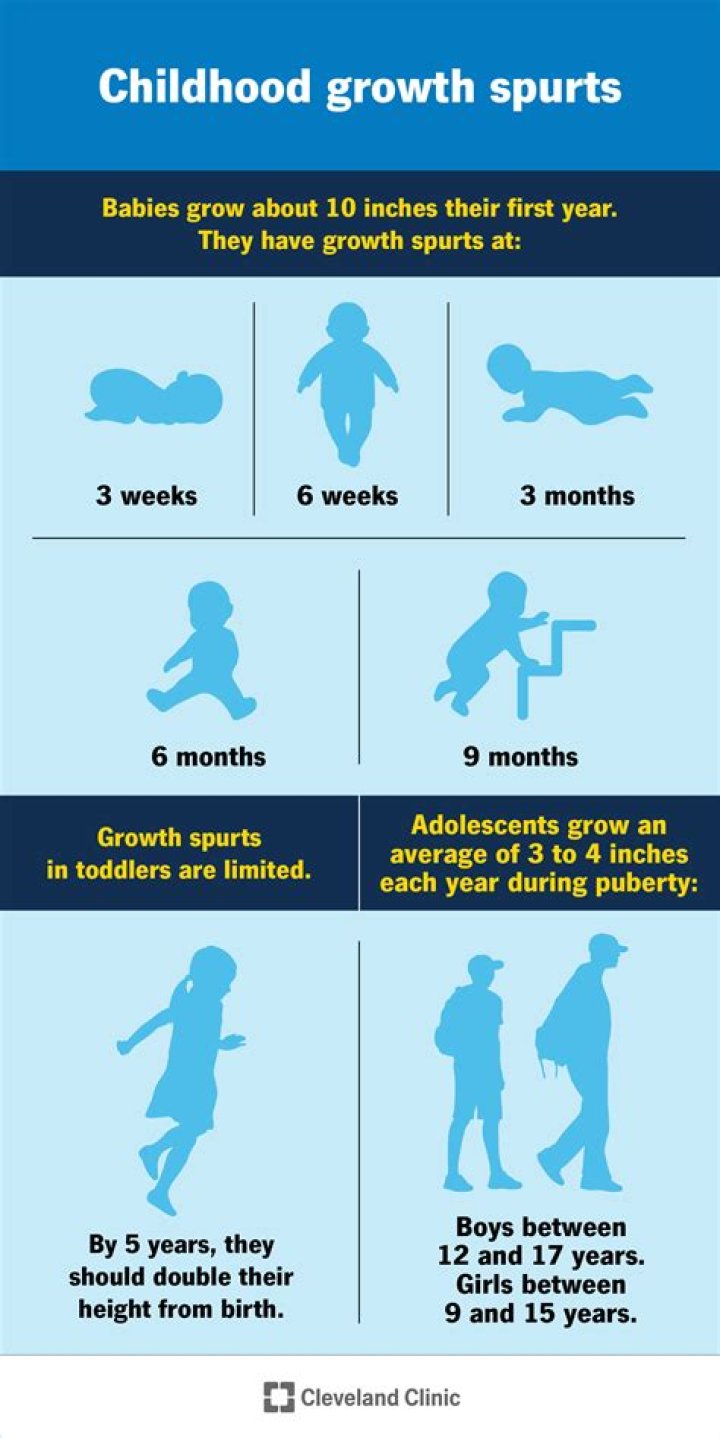
Common times for growth spurts are during the first few days at home and around 7-10 days, 2-3 weeks, 4-6 weeks, 3 months, 4 months, 6 months and 9 months (more or less). Babies don’t read calendars, however, so your baby may do things differently.
Is it possible to hit a growth spurt at 17?
With girls, the final growth spurt tends to hit between 10 and 11 years. This stage can last until they are 15-17 years old. With boys, they tend to start puberty at 11 or 12 and finish around 16 to 17 years old. This of course, does depend on the genetics, quality of diet, amount of sleep and exercise the child is getting.
When does your growth spurt end?
Growth spurts can happen at any time. In young babies, they usually last for one day or two days (Hermanussen 1998). In older babies, they can last up to a week (Wagner 2012). Some experts believe that growth spurts are more likely at certain points in your baby’s first year.
When do boys stop growing in height?
Both boys and girls stop growing in height at the end of puberty. This makes the age slightly different for girls and boys; girls typically reach the end of puberty around age 17 to 18, and boys at the age of 18 to 20.