Where is Onchocerca found?

Jackson Reed
Published Jul 13, 2026
Where is Onchocerca found?
Onchocerciasis is currently relatively common in 31 African countries, Yemen, and isolated regions of South America. Over 85 million people live in endemic areas, and half of these reside in Nigeria. Another 120 million people are at risk for contracting the disease.
How is onchocerciasis diagnosed?
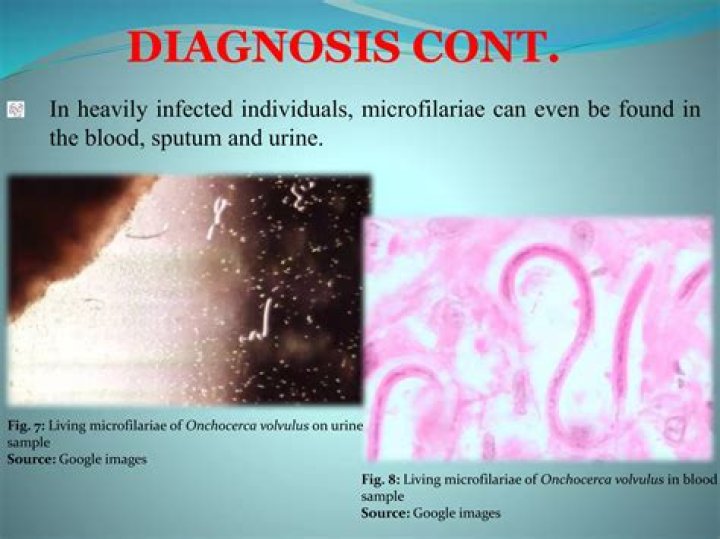
Diagnosis. The gold standard test for the diagnosis of onchocerciasis remains the skin snip biopsy. The biopsy is performed using a sclerocorneal biopsy punch or by elevating a small cone of skin (3 mm in diameter) with a needle and shaving it off with a scalpel. This will result in the removal of around 2 mg of tissue …
Why is it called river blindness?
Parasites – Onchocerciasis (also known as River Blindness) The disease is called river blindness because the blackfly that transmits the infection lives and breeds near fast-flowing streams and rivers, mostly near remote rural villages. The infection can result in visual impairment and sometimes blindness.
Is Onchocerca volvulus prokaryotic or eukaryotic?
This domain originated 1.7 billion years ago from the first prokaryotic organisms (Sidwell 2014). Kingdom: This parasite is classified as an Animalia because it is multicellular and heterotrophic. Another reason is because this parasite ingests and digests food in an internal cavity.
What causes blindness onchocerciasis?
Key facts. Onchocerciasis, commonly known as “river blindness”, is caused by the parasitic worm Onchocerca volvulus. Symptoms include severe itching, disfiguring skin conditions, and visual impairment, including permanent blindness.
Is trachoma acute or chronic?
(Egyptian Ophthalmia; Granular Conjunctivitis) Trachoma is a chronic conjunctivitis caused by Chlamydia trachomatis and is characterized by progressive exacerbations and remissions. It is the leading cause of preventable blindness worldwide.