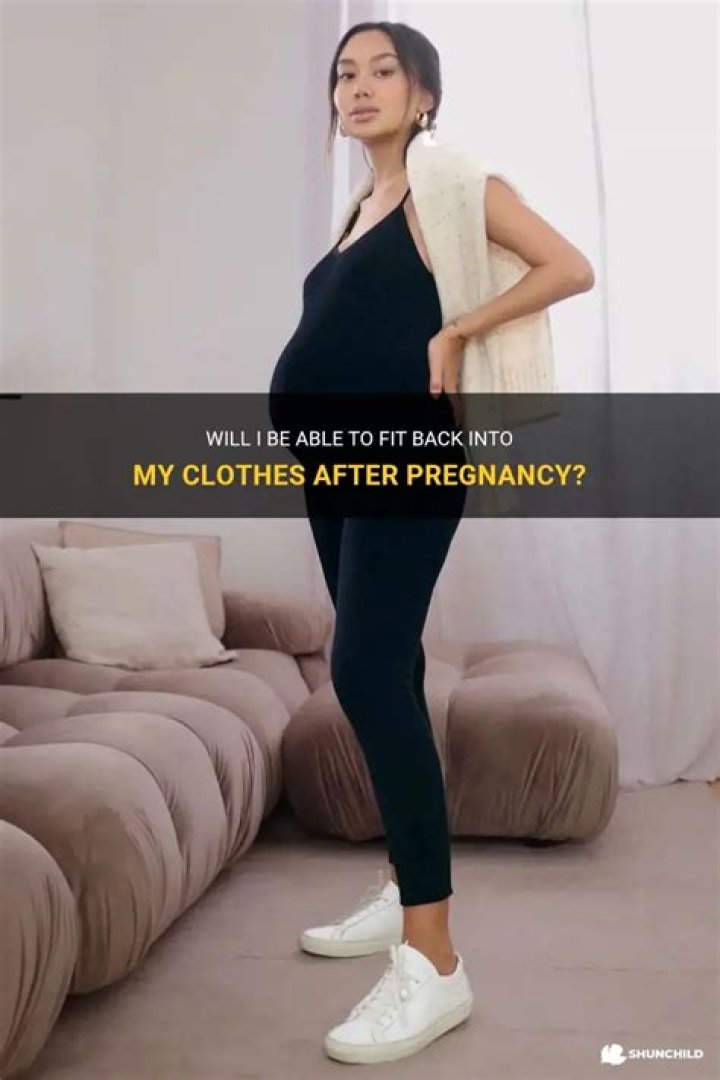
Will I ever fit in pre pregnancy clothes?

Christopher Lucas
Published Jul 14, 2026
Will I ever fit in pre pregnancy clothes?
Probably — but not for a while. Remember, it took nine months to grow your baby, so you can’t expect all traces of your pregnancy to disappear in a few weeks.
How many sizes do you go up when pregnant?
On average, women will go up 2-4 band sizes and cup sizes during their pregnancy. The biggest changes come in the first and second trimester and stabilize around the third trimester…
Do you size up when pregnant?
As all pregnancies are unique and individual, maternity clothes are designed on a normal pregnancy weight gain range. Although it can be tempting to order a size up, only do so if you prefer a relaxed fit or if you have a very large bust.
What size should I get after pregnancy?
Since most women are advised to gain 25-35 pounds while pregnant, you might be almost back to your pre-baby size by this point! The uterus returns to the pelvis around six weeks after birth, and it goes back to its original size (similar to a closed fist). This means your postpartum belly will look flatter and smaller.
How long does it take to return to pre-pregnancy size?
From the moment your baby is born, hormonal changes cause your uterus to contract, shrinking it back to its pre-pregnancy state. It takes six to eight weeks for your uterus to return to its normal size.
Do hips go back to normal after birth?
Even if you weigh the same after having a baby, you may not wear the same clothing size or shoe size, as your hips and feet can widen permanently after pregnancy and birth.
Do your breasts stay the same size after pregnancy?
A woman’s breasts go through some big (and little) changes during and after pregnancy. “They get bigger at first, because the dormant fat tissue in the breast gets replaced by functional tissue” in preparation for breastfeeding, Cackovic said. But these larger breasts don’t last forever.
How can I hide my pregnant belly at 5 months?
Hiding a Bloated First Trimester Belly
- Avoid form-fitting clothing.
- Balance your outfit.
- Add a scarf.
- Accessorize with face-framing jewelry.
- Drop your neckline.
- Be strategic with pregnancy products.
- Always have crackers on hand.
- Sip something soothing.
What should you not wear when pregnant?
Excessively Tight Clothes – the answer, in short, is NO. Anything too tight can restrict blood flow to your growing bump and inhibit movement when going about your day and exercising, risking uncomfortable rashes and chafing. Save the tummy-control wear, like postpartum recovery shorts, for after birth.
Do nipples get bigger after pregnancy?
In the last few weeks of pregnancy the nipples become larger and the breasts continue to grow as the milk-producing cells get bigger. Your breasts may feel uncomfortable and sometimes painful. Wearing a well-fitting bra may help relieve any pain or discomfort.
What size is a 10 during pregnancy?
A woman who was a size 10 pre-pregnancy would still be a size 10 during pregnancy. There may be some cases where you’ll need to buy a different maternity size than your regular clothing size, though. Honestly, it all depends on a brand’s sizing and the way you’re carrying your baby.
What does your body look like at 10 weeks pregnant?
Mom’s Body at 10 Weeks Pregnant. Your uterus is about the size of a large orange at this point, whereas before you became pregnant it was about the size of a small pear.
What size should I wear when pregnant?
Most pregnant woman best fit their pre-pregnany (good old) clothing size in maternity clothing (since size is upscaled). But every pregnant body are different, and someone need another size than their pre-pregnant size when pregnant. Use our maternity size chart below to determine maternity size from actual body measurements.
What does a rounder tummy mean at 10 weeks pregnant?
Rounder Tummy. First thing you’re likely to notice at 10 weeks pregnant (and the first thing you’ll be looking for, duh ) is a slight roundness in your lower abdomen — which will probably be more noticeable if you’re slight to begin with and less so if you’re not. That’s your ever-growing uterus you’re checking out,…