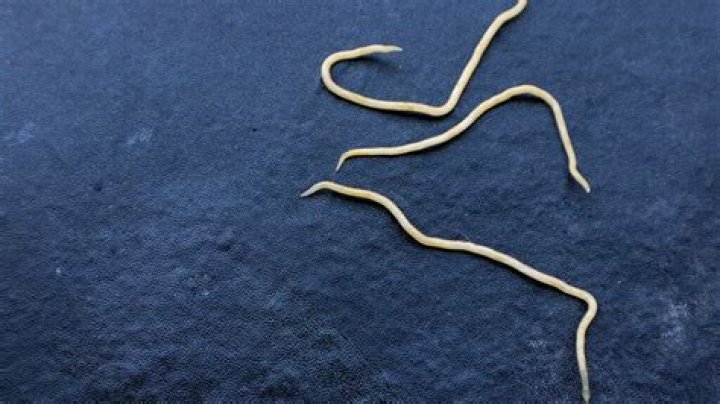
What does ribbon worm look like?

Emily Dawson
Published Jul 14, 2026
What does ribbon worm look like?
Unlike annelids, ribbon worms are not segmented. Instead, ribbon worms look a little like living linguine noodles, but are often very beautiful, with bright colors or stripes. They can stretch and contract their soft bodies, and they move by gliding over the bottom using slime and tiny hairs called cilia.
What is the stuff ribbon worms spit out?
The ribbon worm uses its proboscis when hunting, vomiting a feeding tube sheath from above its mouth, which is thick and sticky. It contains mucus that has a neurotoxins that paralyze its prey. The white goo expands, and in the video, you can see the webs branch out on the person’s hand.
What comes out of a proboscis worm?
Nemertea is a phylum of invertebrate animals also known as ribbon worms or proboscis worms. All species have a proboscis which lies in the rhynchocoel when inactive but everts (turns inside-out) to emerge just above the mouth and capture the animal’s prey with venom.
Are ribbon worms rare?
Being soft bodied and boneless, ribbon worms leave virtually no trace in the fossil record. Gorgonorhynchus may be rare, but ribbon worms are found across the globe in marine, freshwater, and terrestrial environments. One is especially notable: Lineus longissimus, which has been measured at more than 30 meters long.
Where can ribbon worms be found?
There are about 1,400 species of ribbon worms nearly all of which are found in oceans around the world. Most species live on or in the sea floor, with many species found in brackish water in estuaries, and even some freshwater and land-based species.
How do ribbon worms recover if they are hurt or bitten?
Many ribbon worms can regenerate when a predator takes a bite, healing their broken ends. One worm species, Ramphogordius sanguineus, has an exceptional ability to regenerate: if any part of their body is severed (except for the very tip of their tail where there are no nerves), it can regrow into a new worm.
Is a ribbon worm poisonous?
7. As a second line of defense, many ribbon worms are poisonous and taste bad. Several species contain tetrodotoxin, the infamous pufferfish venom that can induce paralysis and death by asphyxia.
What is the slimy stuff on worms?
Each worm has a pair of slime glands, located below their antennae, that squirt a sticky mucus. The milky-white goo covers the victim in a net of slime, immobilizing it for easier eating.
Where are proboscis worms found?
The majority of the approximately 900 known nemertean species are found in marine habitats. Some, however, live in freshwater or on land. The name proboscis worm derives from the muscular eversible proboscis, which is housed in a fluid-filled chamber above the gut.
What is the interesting thing about ribbon worm?
The ribbon worm, or nemerteans, is a group of segmented marine worms found throughout the world’s oceans. Ranging in size depending on the species, some ribbon worms grow very long. Indeed, the bootlace worm (Lineus longissimus), can grow longer than a blue whale, possibly making it the longest animal in the world.
What is the genus of the ribbon worm?
The genus of this gross little sticky-noodle-spewing worm isn’t certain, but it likely belongs to Gorgonorhynchus . Gorgonorhynchus is one type of ribbon worm— or a worm with a proboscis, which is an appendage that, in the case of ribbon worms, shoots out of their heads to grab onto prey and pull it back toward their mouths.
What type of worm is Gorgonorhynchus repens?
Gorgonorhynchus repens is a species of the proboscis worm in the subclass Heteronemertea and of the family Gorgonorhynchidae. It is to be found on the seabed in shallow water in the Pacific Ocean. G. repens is orange in colour and grows to an unstretched length of about 50 mm (2 in).
How do ribbon worms survive in the ocean?
Because their delicate bodies rely on water pressure to hold everything in place, ribbon worms do not fare well away from the ocean environment. In fact, they typically survive for only about ten minutes in the open air.
Is there a Gorgonorhynchus in Thailand?
That suggests this rare anatomical trait arose independently several times. These few Gorgonorhynchus species live in Bermuda, and a cousin genus, Dendrorhynchus, has been spotted in China. None have been found in Thailand. They’re also scarce.