Why does livedo reticularis happen?

Emily Dawson
Published Jul 11, 2026
Why does livedo reticularis happen?
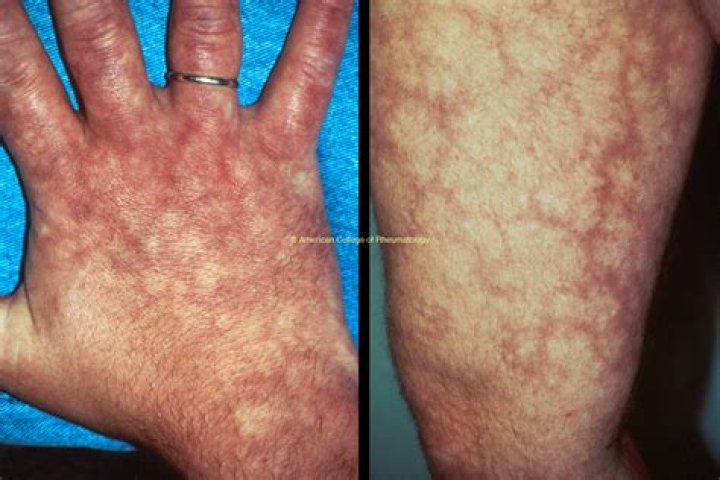
Livedo reticularis is thought to be due to spasms of the blood vessels or an abnormality of the circulation near the skin surface. It makes the skin, usually on the legs, look mottled and purplish, in sort of a netlike pattern with distinct borders. Sometimes livedo reticularis is simply the result of being chilled.
Can livedo reticularis come and go?
Primary: Primary livedo reticularis also comes and goes, but not in response to cold temperatures. It is not associated with an underlying condition.
How can I reduce my livedo reticularis?
There is no specific treatment for livedo reticularis, except for cold avoidance. In some patients, the symptoms may improve spontaneously with age. Rewarming the area in idiopathic cases or treatment of the underlying cause of secondary livedo may reverse the discolouration.
Can livedo reticularis be caused by stress?
There are two forms of LR: primary and secondary. Secondary LR is also known as livedo racemosa. With primary LR, exposure to cold, tobacco use, or emotional upset can lead the skin discoloration.
Is livedo reticularis vascular?
Livedo reticularis is a common skin finding consisting of a mottled reticulated vascular pattern that appears as a lace-like purplish discoloration of the skin.
How do you test for livedo reticularis?
Blood tests are performed to diagnose possible underlying causes. A skin biopsy may also provide a clue to the underlying related condition. Primary livedo reticularis is a “diagnosis of exclusion” which means that the term is only used if no other cause can be detected.
Can dehydration cause mottled skin?
Signs of severe dehydration in a child include: decreased level of consciousness. pale or mottled skin.
Does exercise help livedo reticularis?
Livedo reticularis can be a normal condition that is simply more obvious when a person is exposed to the cold; however, over time it may become permanent. In severe cases ulcers in the extremities may occur. Exercise is the best remedy. Increased circulation helps to dilate the blood vessels throughout the body.
Can a hot water bottle cause mottled skin?
Erythema ab igne (EAI), also known as hot water bottle rash, is a skin condition caused by long-term exposure to heat (infrared radiation). Prolonged thermal radiation exposure to the skin can lead to the development of reticulated erythema, hyperpigmentation, scaling and telangiectasias in the affected area.
What are the symptoms of being dehydrated?
Signs of severe dehydration include:
- Not peeing or having very dark yellow pee.
- Very dry skin.
- Feeling dizzy.
- Rapid heartbeat.
- Rapid breathing.
- Sunken eyes.
- Sleepiness, lack of energy, confusion or irritability.
- Fainting.
What are the signs and symptoms of livedo reticularis?
Physiologic livedo reticularis: A distinctive skin discoloration is the only symptom. It consists of a reddish-purplish discoloration that is finely reticulated (web-like), and that forms numerous circular patterns on the skin surface.
Can hypothyroidism cause livedo reticularis?
Hypothyroidism can lead to livedo reticularis. It is the signs that indicate you have abnormal thyroxine levels. The thyroid hormones have a direct effect on your metabolic rate. The underactive thyroid does not produce the necessary hormone, leading to several issues.
How do you get rid of livedo reticularis?
Home Remedies For Livedo Reticularis. 1 Aloe Vera. Aloe Vera has healing properties that can ease the irritation and itching of your skin. The soothing gel can provide good relief when you 2 Oatmeal. 3 Green Tea. 4 Coconut Oil. 5 Yogurt.
What is livelivedo reticularis (mottled skin)?
Livedo Reticularis is referred to as the condition of your skin. The problem also known as mottled skin causes your skin to have reddish or purple patches. Your skin has a web or net form of pattern that looks dangerous. But, the problem can occur as a standalone condition due to the weather factor.